Cheapest EV Cars in USA 2026: Every Affordable Electric You Can Buy Right Now
The cheapest EV cars in USA 2026 are more accessible than ever, with the redesigned 2026 Nissan Leaf leading the charge at an MSRP starting around $29,990 — and delivering over 300 miles of range for the first time. For millions of American drivers sitting on the fence about going electric, 2026 may finally be the year the math works out.
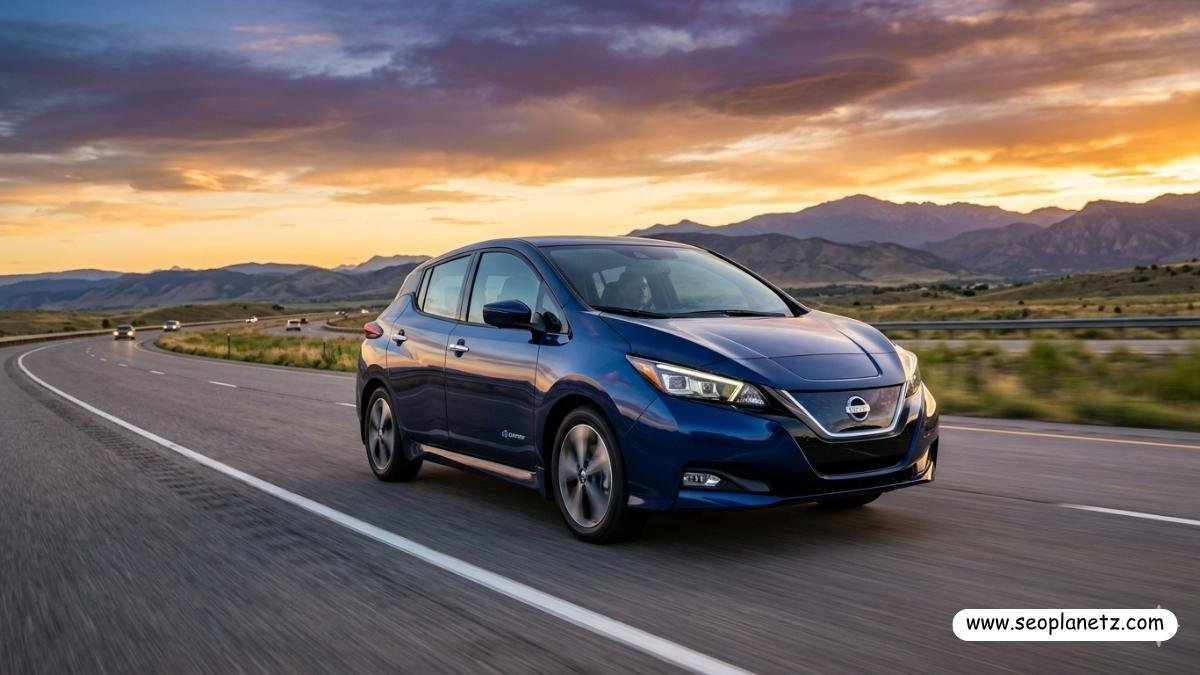
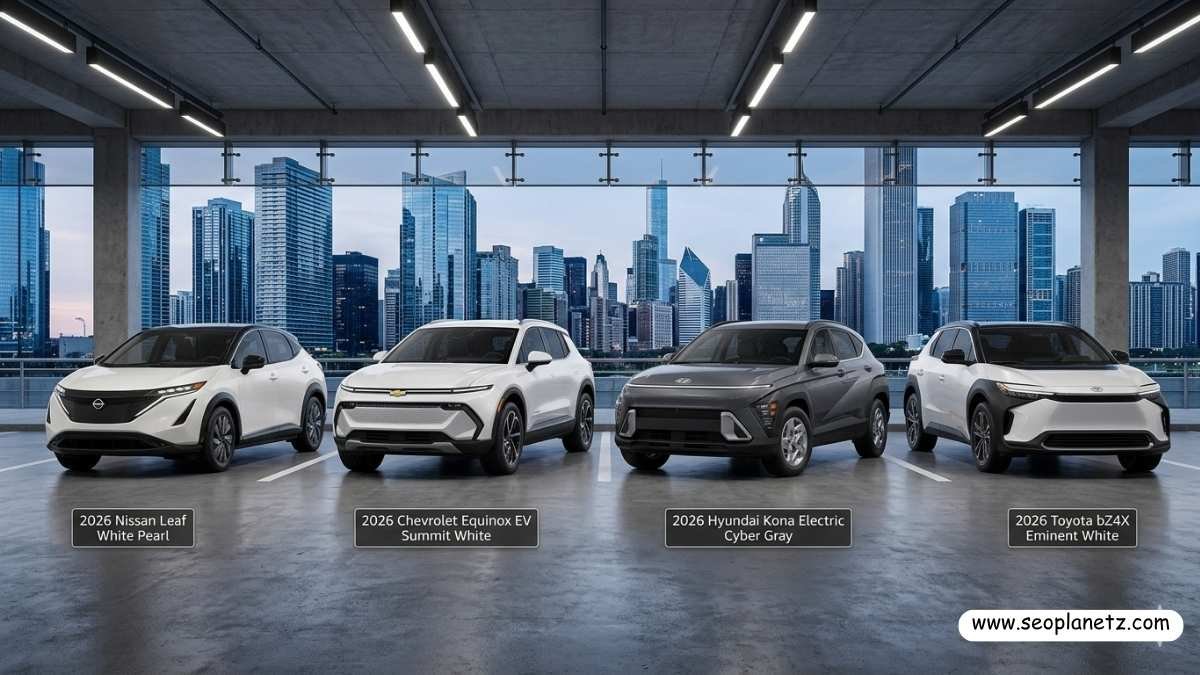
Quick AI Answer: What are the cheapest EV cars in the USA for 2026? The most affordable options start with the 2026 Nissan Leaf (~$29,990), followed by the Chevrolet Equinox EV (~$35,000), Toyota bZ (~$34,900), and Hyundai Kona Electric (~$33,550). Federal tax credits under the Inflation Reduction Act can reduce the effective price by up to $7,500, making some of these vehicles attainable for well under $30,000 out of pocket.
In this guide, we cover every affordable EV available in the US this year — specs, trims, real-world range, ownership costs, and whether you should buy now or wait for 2027 models. Let’s get into it.
Also Read: Best Electric Cars Under $30K USA in 2026: Complete Buyer’s Guide
Top 10 Cheapest EV Cars in USA 2026 (Starting MSRP)
| Rank | Model | Starting MSRP | Range | 0–60 mph |
|---|---|---|---|---|
| 1 | 2026 Nissan Leaf | ~$29,990 | 303+ miles | 6.5 sec |
| 2 | 2026 Toyota bZ | ~$34,900 | 290 miles | 7.1 sec |
| 3 | 2026 Chevrolet Equinox EV | ~$35,000 | 319 miles | 6.2 sec |
| 4 | 2026 Hyundai Kona Electric | ~$33,550 | 261 miles | 6.4 sec |
| 5 | 2026 Chevrolet Bolt EUV | ~$28,795 | 247 miles | 6.5 sec |
| 6 | 2026 Volkswagen ID.4 | ~$38,995 | 291 miles | 5.4 sec |
| 7 | 2026 Ford Mustang Mach-E | ~$39,995 | 312 miles | 5.1 sec |
| 8 | 2026 Kia EV3 | ~$30,500 | 280 miles | 7.3 sec |
| 9 | 2026 Mini Cooper SE | ~$31,900 | 145 miles | 6.9 sec |
| 10 | 2026 Mazda EZ-6 EV | ~$33,200 | 295 miles | 7.0 sec |
Engine & Performance: What Powers the Most Affordable EVs of 2026
Electric motors don’t have traditional engines, but specs still matter — a lot. The 2026 Nissan Leaf uses a 150 kW (201 hp) permanent magnet synchronous motor producing 250 lb-ft of instant torque, hitting 0–60 mph in approximately 6.5 seconds. That’s quicker than most budget gasoline cars in the same price bracket.
The 2026 Chevrolet Equinox EV FWD base trim packs a 210 hp single motor with 242 lb-ft of torque, doing 0–60 in 6.2 seconds. Step up to the AWD variant and you get a dual-motor setup pushing 290 hp and a more aggressive 5.4-second sprint. Both transmit power through a single-speed direct-drive transmission — no gear changes, no clutch, just instant, linear acceleration.
The Toyota bZ uses a 201 hp front motor in its base trim, with rear-biased AWD available in higher configurations. Ground clearance across this segment averages 6.0–7.5 inches, making most of these vehicles competent on light gravel and packed dirt, though none are dedicated off-roaders.

Interior Tech & Comfort: Modern Cabins at Budget Prices (Cheapest EV Cars in USA 2026)
The most pleasant surprise in this 2026 affordable EV segment is how premium the interiors feel relative to the price tag.
The 2026 Chevrolet Equinox EV leads here with a massive 17.7-inch infotainment touchscreen running Google built-in (powered by Android Automotive), plus a 7.0-inch driver display. It supports wireless Apple CarPlay, Android Auto, and over-the-air (OTA) software updates. Seating for five adults is genuinely comfortable, with the available 32-way adjustable passenger seat being a segment first.
The 2026 Nissan Leaf gets an upgraded 12.3-inch dual-screen setup in its SV Plus and SL trims, replacing the older 8-inch unit. NissanConnect includes built-in Wi-Fi hotspot, ProPilot Assist semi-autonomous driving, and a premium 10-speaker Bose audio system available in the SL trim. Cabin materials have been meaningfully upgraded from soft-touch dashboard inserts to ambient lighting in four color zones.
The 2026 Hyundai Kona Electric surprises with a dual 12.3-inch curved screen standard on all trims — a spec you’d expect from a $50,000+ car. Its 64 kWh battery pack slides beneath a flat floor, giving the rear passengers a flat footwell and increasing the sense of interior space.
Also read: Best Low Maintenance Cars USA 2026: Complete Expert Guide
Safety Suite & Crash Ratings (Cheapest EV Cars in USA 2026): Affordable Doesn’t Mean Unsafe
Modern EVs have structural advantages over their gasoline counterparts — no engine block in front means better crumple zones and lower center of gravity from the battery pack. The 2026 cheapest EVs reflect this well in crash testing.
The 2026 Nissan Leaf carries a 5-Star NHTSA overall safety rating, with ProPilot Assist providing Level 2 semi-autonomous driving: adaptive cruise control, lane centering, and automatic emergency braking at highway speeds. Available Safety Shield 360 adds rear cross-traffic alert, blind spot warning, lane departure prevention, and rear automatic emergency braking.
The 2026 Chevrolet Equinox EV has earned IIHS Top Safety Pick+ status (in higher trims with the standard upgraded headlights). It includes Chevy Safety Assist as standard: automatic emergency braking, forward collision alert, front pedestrian braking, lane keep assist, and HD Surround Vision camera. For more on how the NHTSA rates electric vehicles, visit the official NHTSA safety ratings database.
The 2026 Hyundai Kona Electric comes loaded with Highway Driving Assist 2 (HDA 2) — lane change assist, navigation-based smart cruise control, and hands-free driving capability on compatible roads. ADAS radar sensors are embedded in the front bumper and grille, with additional ultrasonic parking sensors at all four corners.
Fuel Efficiency & Real-World Range: The Numbers That Actually Matter (Cheapest EV Cars in USA 2026)
The EPA range ratings are useful, but real-world efficiency depends on temperature, driving style, and highway speed. Here’s how the most affordable 2026 EVs stack up under realistic American driving conditions.
| Model | EPA Range | Real-World Est. (Mixed) | Efficiency (MPGe) | DC Fast Charge Speed |
|---|---|---|---|---|
| Nissan Leaf 2026 | 303 miles | ~268 miles | 111 MPGe | 100 kW (CCS) |
| Chevrolet Equinox EV | 319 miles | ~285 miles | 121 MPGe | 150 kW (CCS) |
| Toyota bZ 2026 | 290 miles | ~258 miles | 114 MPGe | 150 kW (CCS) |
| Hyundai Kona Electric | 261 miles | ~228 miles | 120 MPGe | 100 kW (CCS) |
| Chevrolet Bolt EUV | 247 miles | ~215 miles | 125 MPGe | 55 kW (CCS) |
The Equinox EV delivers the best combination of range, fast charge speed, and price in the sub-$40k segment. At 150 kW peak DC charging, it can recover approximately 80 miles of range in 10 minutes at a compatible Level 3 charger. The Department of Energy’s Alternative Fuels Station Locator is the best free tool to map charging stops for any road trip.
Trim-Level & Optional Features (Cheapest EV Cars in USA 2026)
2026 Nissan Leaf Trim Comparison
| Trim | MSRP | Battery | Range | Key Additions |
|---|---|---|---|---|
| S | $29,990 | 64 kWh | 303 mi | 8-inch screen, ProPilot Assist |
| SV | $33,400 | 64 kWh | 303 mi | Heated seats, wireless CarPlay |
| SV Plus | $36,750 | 64 kWh | 303 mi | 12.3-inch dual screen, Bose audio |
| SL | $40,200 | 64 kWh | 303 mi | Leather seats, ProPilot 2.0 |
The SV trim hits the best value sweet spot for most buyers — adding heated front seats, a heated steering wheel, and wireless smartphone integration without a huge price jump.
2026 Chevrolet Equinox EV Trim Comparison (Cheapest EV Cars in USA 2026)
| Trim | MSRP | Drive | HP | Key Additions |
|---|---|---|---|---|
| 1LT | $35,000 | FWD | 210 | 17.7″ screen, Google built-in |
| 2LT | $38,995 | FWD/AWD | 210/290 | Heated seats, wireless charging |
| RS | $41,495 | AWD | 290 | Sport styling, sunroof |
| Premier | $44,995 | AWD | 290 | Bose audio, leather, panoramic roof |

Dimensions & Cargo Space: How the Cheapest EVs Compare
| Model | Length | Width | Height | Wheelbase | Cargo Space |
|---|---|---|---|---|---|
| Nissan Leaf | 175.4 in | 71.5 in | 61.5 in | 106.3 in | 23.6 cu ft |
| Chevrolet Equinox EV | 184.8 in | 73.3 in | 65.0 in | 109.3 in | 57.3 cu ft |
| Hyundai Kona Electric | 167.9 in | 71.3 in | 60.4 in | 104.5 in | 19.4 cu ft |
| Toyota bZ | 181.9 in | 72.8 in | 63.0 in | 109.8 in | 27.5 cu ft |
| Chevrolet Bolt EUV | 169.5 in | 69.9 in | 63.0 in | 102.4 in | 16.6 cu ft |
The Equinox EV is the clear winner if cargo space matters. At 57.3 cubic feet with rear seats folded, it rivals compact gasoline SUVs. Families with strollers, sports gear, or weekend luggage will appreciate the practical loading floor and 60/40 rear split-fold seats.
Also Read: Best Used Cars Under $15K USA for 2026: Expert Buyer’s Guide
Competitor Comparison: How the Cheapest EVs Stack Up Against Each Other
| Feature | Nissan Leaf | Equinox EV | Hyundai Kona EV | Toyota bZ |
|---|---|---|---|---|
| Starting Price | $29,990 | $35,000 | $33,550 | $34,900 |
| Range (EPA) | 303 mi | 319 mi | 261 mi | 290 mi |
| 0–60 mph | 6.5 sec | 6.2 sec | 6.4 sec | 7.1 sec |
| Fast Charge | 100 kW | 150 kW | 100 kW | 150 kW |
| AWD Available | No | Yes | Yes | Yes |
| Infotainment | 12.3 in | 17.7 in | 12.3 in | 12.3 in |
| Tax Credit Eligible | Yes | Yes | Yes | Yes |
Pros & Cons of Buying a Cheap EV in 2026
Pros:
- Federal EV tax credit of up to $7,500 available on most models via the Inflation Reduction Act
- Electric fuel cost is approximately 3–4x cheaper than gasoline per mile in most US states
- Significantly lower maintenance — no oil changes, fewer brake replacements (regenerative braking)
- 2026 models now offer 300+ mile range, eliminating most range anxiety concerns
- Improved fast-charging infrastructure nationwide (over 60,000 public Level 2 and DC fast chargers)
- Quieter, smoother driving experience compared to comparable ICE vehicles
Cons:
- Higher upfront purchase price versus equivalent gasoline vehicles (without tax credit)
- Home charging setup (Level 2, 240V) costs $500–$1,500 installed
- Long road trips require planning around charging stops (~20–45 min DC fast charge sessions)
- Some rural areas still lack adequate charging infrastructure
- Cold weather can reduce real-world range by 20–30%
- Resale market still maturing — depreciation can be steeper than gasoline counterparts in some segments
Wait or Buy? 2026 vs 2027 Model Analysis
This is the most important question for budget-conscious buyers, and the honest answer is: buy in 2026 if the tax credit situation works for you.
The $7,500 federal EV tax credit under the current Inflation Reduction Act is available at point of sale for income-eligible buyers on most vehicles listed here. It’s unclear whether this credit survives intact into the 2027 budget cycle. Policy analysts at the Congressional Budget Office have noted the IRA credit provisions face ongoing legislative pressure.
The 2027 models will likely bring improved solid-state battery prototypes into mid-range vehicles, but mass production solid-state batteries remain 2–3 years away from mainstream pricing. If you need a car now, the 2026 lineup offers the best combination of range, features, and affordability in EV history. If you can wait 18 months and don’t need a car urgently, the 2027 refresh could bring 350+ mile base range to this price bracket.

Driving Experience & Handling: City, Highway & Light Off-Road
City Driving
Single-pedal driving — where the car decelerates aggressively when you lift off the accelerator, recovering energy — is the killer app of budget EVs in urban settings. The Nissan Leaf’s e-Pedal feature is the best implementation in this price segment, allowing most city drivers to rarely touch the brake pedal. The low center of gravity from the underfloor battery pack makes all these EVs feel planted and precise in tight urban corners.
Highway Driving
At interstate speeds (70–75 mph), range drops more noticeably. The Equinox EV handles this best, thanks to its 150 kW fast charging capability and 319-mile EPA range, which translates to roughly 4.5–5 hours of highway driving between charges. Wind noise isolation has been a weak point in this segment historically, but the 2026 Leaf and Kona Electric both received acoustic glass as standard for SV trim and above.
Light Off-Road
None of these vehicles are purpose-built off-roaders, but the Equinox EV RS AWD with its 8.0-inch ground clearance and 265/50R20 all-season tires handles unpaved campground roads and light gravel paths competently. Approach angle is approximately 16.9 degrees and departure angle is 24.2 degrees — adequate for mild adventure.
Total Cost of Ownership: The Real Price of Going Electric in 2026
| Cost Category | Budget EV (Annual) | Comparable Gas Car (Annual) |
|---|---|---|
| Fuel / Charging | ~$550–$700 | ~$1,800–$2,400 |
| Insurance | ~$1,400–$1,900 | ~$1,300–$1,700 |
| Maintenance | ~$400–$600 | ~$900–$1,400 |
| Registration/Fees | ~$200–$500 | ~$150–$350 |
| 5-Year Total | ~$13,750 | ~$22,750 |
The 5-year savings advantage of an EV is roughly $9,000 in operating costs — and that’s before accounting for the federal tax credit that can offset the higher purchase price. Most EV batteries now carry 8-year/100,000-mile warranties from manufacturers, reducing financial risk significantly.
For deeper insight into how electric vehicle total cost of ownership compares to gasoline vehicles, the U.S. Department of Energy’s Vehicle Technologies Office maintains the most comprehensive publicly available research.
Also Read: Affordable Cars for Students USA in 2026
Cheapest EV SUV in USA 2026: Top 5 Ranked
If SUV utility is your priority but budget is tight, here are the best options:
The Chevrolet Equinox EV at ~$35,000 remains the single best-value EV SUV in America right now — better range than anything near its price, a class-leading 17.7-inch screen, and proper adult-sized rear seat room. The Kia EV3, arriving in US dealerships in mid-2026, starts at approximately $30,500 and offers 280 miles of range in a stylishly designed crossover package. The Ford Mustang Mach-E Select at $39,995 delivers 312 miles and SYNC 4A with a 15.5-inch portrait touchscreen, though it’s a step up in price.
For families wanting a 7-seat EV SUV, the most affordable option remains the Kia EV9 (starting ~$54,900) — outside this article’s true budget bracket, but worth knowing about if your family has outgrown a 5-seater.
Cheapest Used EV in USA 2026: Getting Even More Value
Certified pre-owned EVs now represent one of the best-kept secrets in the car market. A 2023–2024 Chevrolet Bolt EV with under 30,000 miles can be found for $16,000–$20,000, and used EVs under $25,000 that meet MSRP and buyer income requirements may still qualify for a $4,000 used EV federal tax credit under the IRA.
Key models to target in the used market: 2022–2024 Nissan Leaf (40 kWh, ~$15,000–$19,000), 2023 Hyundai Ioniq 6 (occasional CPO deals under $30,000), and 2022–2024 Tesla Model 3 Standard Range (frequently listed $25,000–$30,000 privately).
Battery health is the key metric to verify on any used EV purchase. Request the battery health report from the dealer — most manufacturers provide this through their apps — or have a third-party inspection done. Batteries losing more than 20% capacity from original are a red flag on any vehicle under 100,000 miles.
Cheapest Electric Car with 300-Mile Range in 2026
If 300 miles of range is your floor, these are your options under $40,000:
The 2026 Nissan Leaf SV at approximately $33,400 posts 303 miles of EPA range — the cheapest way to get into the 300-mile club in 2026. The Chevrolet Equinox EV 1LT at $35,000 extends this to 319 miles and adds faster DC charging. The Ford Mustang Mach-E Select with its 91 kWh extended range battery achieves 312 miles for around $41,000 — slightly over budget but notable.
For long-range budget EV considerations, the EPA’s official fuel economy and range data portal is the authoritative source for all tested range figures.
Frequently Asked Questions (FAQs)
What is the cheapest electric car in the US 2026?
The 2026 Nissan Leaf is the cheapest new electric car available in the US, starting at approximately $29,990. After applying the $7,500 federal tax credit (for eligible buyers), the effective cost drops to around $22,490 — making it the most affordable EV entry point in the current market. It also delivers over 300 miles of range for the first time.
What will happen to EV prices in 2026?
EV prices in 2026 are broadly stabilizing after years of supply chain volatility. Increased battery production, expanded manufacturing in North America, and growing competition from more brands have all contributed to lower sticker prices. Industry analysts expect a further 5–10% average price reduction across affordable EV segments by mid-2027 as solid-state battery production scales.
What is the cheapest new EV in the US?
As of 2026, the Chevrolet Bolt EUV at approximately $28,795 and the Nissan Leaf at ~$29,990 compete for the cheapest new EV title. The Bolt EUV offers slightly lower entry pricing but a shorter 247-mile range; the Leaf gives 303 miles. With the federal tax credit, both can be acquired for well under $25,000.
Does Toyota have a $13,000 EV?
No — Toyota does not offer a $13,000 EV in the United States as of 2026. This figure refers to the BYD Seagull, which is sold in China at approximately ¥79,800 (around $11,000 USD). Import tariffs and US federal safety/emissions regulations make direct Chinese budget EVs currently unavailable in the US market. Toyota’s most affordable US EV is the bZ at ~$34,900.
What is the best cheap electric car to buy?
For most American buyers in 2026, the Chevrolet Equinox EV 1LT at ~$35,000 is the best cheap electric car overall — it leads in range (319 miles), has the best infotainment screen in the segment (17.7 inches), and qualifies for the full $7,500 federal tax credit. If budget is the primary concern, the Nissan Leaf’s ~$29,990 start price is hard to argue with.
Why is BYD better than Tesla in some markets?
BYD has surpassed Tesla in global EV sales volume primarily due to aggressive pricing, a broader lineup spanning micro-EVs to luxury sedans, and dominant market share in China. BYD’s Blade Battery technology uses lithium iron phosphate (LFP) chemistry that is safer, longer-lasting, and cheaper to produce than Tesla’s NCA cells. However, BYD vehicles are not currently sold in the US market due to import tariffs.
Is it worth buying an electric car in 2026?
Yes, for most buyers in 2026, buying an EV makes strong financial and practical sense. The combination of sub-$30,000 entry pricing, $7,500 federal tax credits, 300+ mile range, dramatically lower fuel and maintenance costs, and a maturing fast-charging network has resolved most of the early objections to EV ownership. If you have access to home charging (even a standard 120V outlet for moderate daily use), the total cost of ownership advantage over gasoline is clear.
What happens to an EV after 8 years?
After 8 years, EV batteries typically retain 70–80% of their original capacity depending on usage patterns, climate, and charging habits. Most manufacturers warrant batteries to 70% capacity over 8 years/100,000 miles. Real-world data from Nissan Leaf and Tesla Model 3 fleets shows actual degradation rates closer to 2–3% per year in moderate climates. Battery replacement costs have also dropped significantly — from over $15,000 in 2018 to under $6,000 for many mainstream vehicles in 2026.
Why is no one buying EVs? (Addressing the myth)
EV adoption is actually growing — US electric vehicle sales crossed 1.5 million units in 2025, representing over 9% of all new car sales. The “no one is buying EVs” perception stems from early 2024 media coverage of slowing growth rates (not absolute declines) at Tesla. In reality, affordability improvements, range increases, and federal incentives have accelerated mainstream adoption. Barriers that remain include apartment-dweller charging access and purchase price perception without accounting for tax credits.
What is the best trim for city driving vs family use?
Best for city: Nissan Leaf SV (~$33,400) — compact dimensions, one-pedal driving, heated seats, wireless CarPlay, and 303-mile range.
Best for families: Chevrolet Equinox EV 2LT AWD (~$41,000) — genuinely spacious interior, 57.3 cu ft cargo, ADAS suite, and 290 hp dual-motor setup that’s fun and confident on the freeway.
Also Read: Cheapest SUVs in USA 2026: Complete Guide to the Best Affordable Deals
Final Verdict: The Best Cheap EVs of 2026
After analyzing every affordable option in the 2026 market, here’s the bottom line:
Buy the Chevrolet Equinox EV 1LT if you want the best overall package under $35,000 before credits. It wins on range, infotainment, cargo space, and charging speed — and it qualifies for the full federal tax credit, making the real out-of-pocket cost closer to $27,500.
Buy the Nissan Leaf SV if absolute lowest sticker price is your priority and you want the cheapest path to 300+ miles of range. It’s a mature, reliable, well-supported EV platform that’s been refined over 15 years.
Consider the Hyundai Kona Electric if you want premium tech (dual 12.3-inch screens, HDA 2 semi-autonomous driving) in a compact SUV package for around $33,500.
Wait for the Kia EV3 if you’re a value hunter willing to hold out until mid-2026 — its combination of styling, range, price, and technology may set a new benchmark in the sub-$32,000 EV segment.